Backup and restore
Understanding Amazon RDS Backup and Restore
ℹ️ Information: Amazon RDS provides automated backups and allows manual snapshots to ensure your database data is protected and can be recovered when needed. These capabilities are essential for disaster recovery planning and maintaining business continuity.
Monitoring Backup Status in Amazon RDS
- On the AWS RDS interface, you can perform the following steps to access backup monitoring:
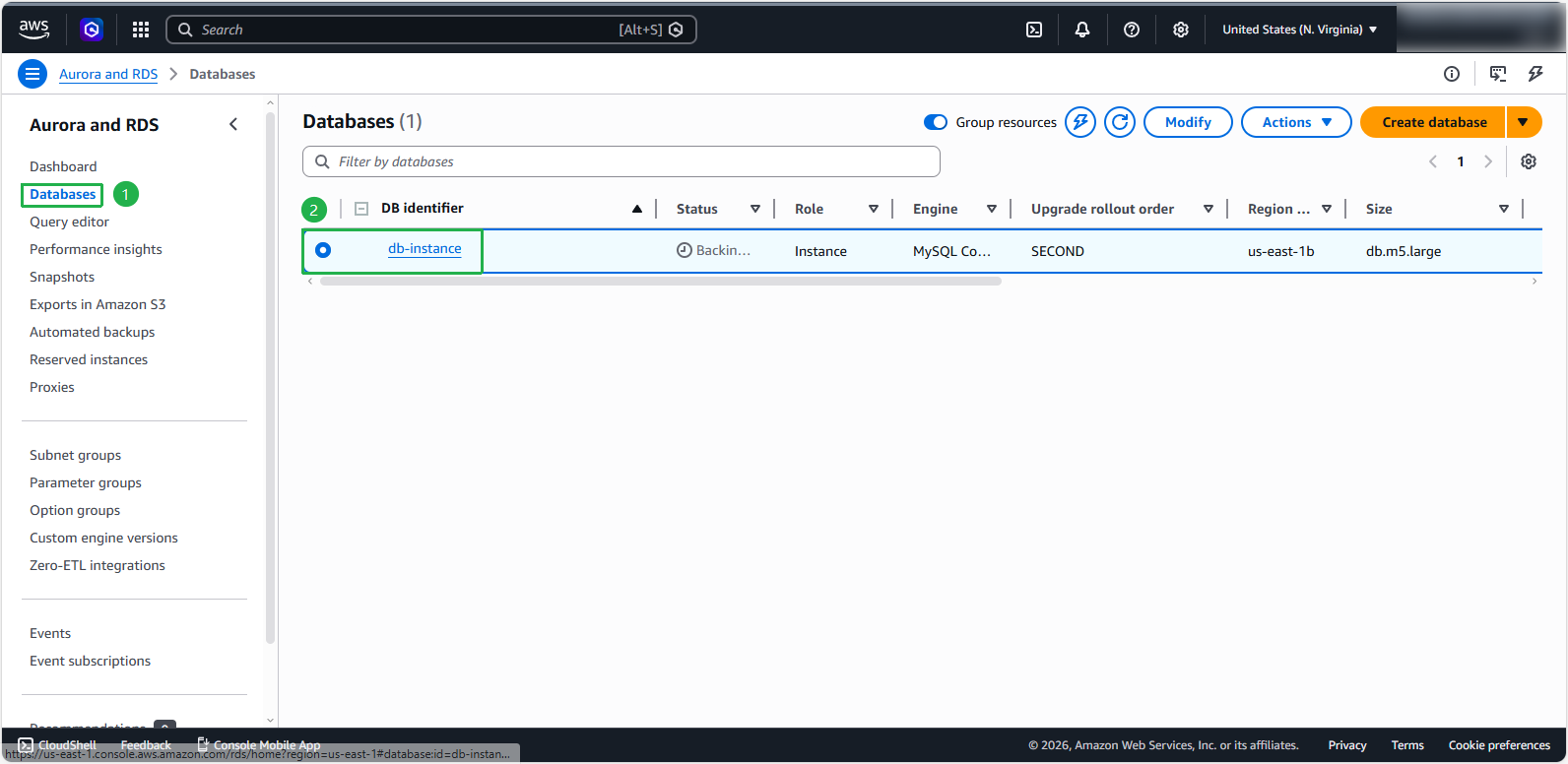
- Select Databases.
- Choose the DB instance you’ve created.
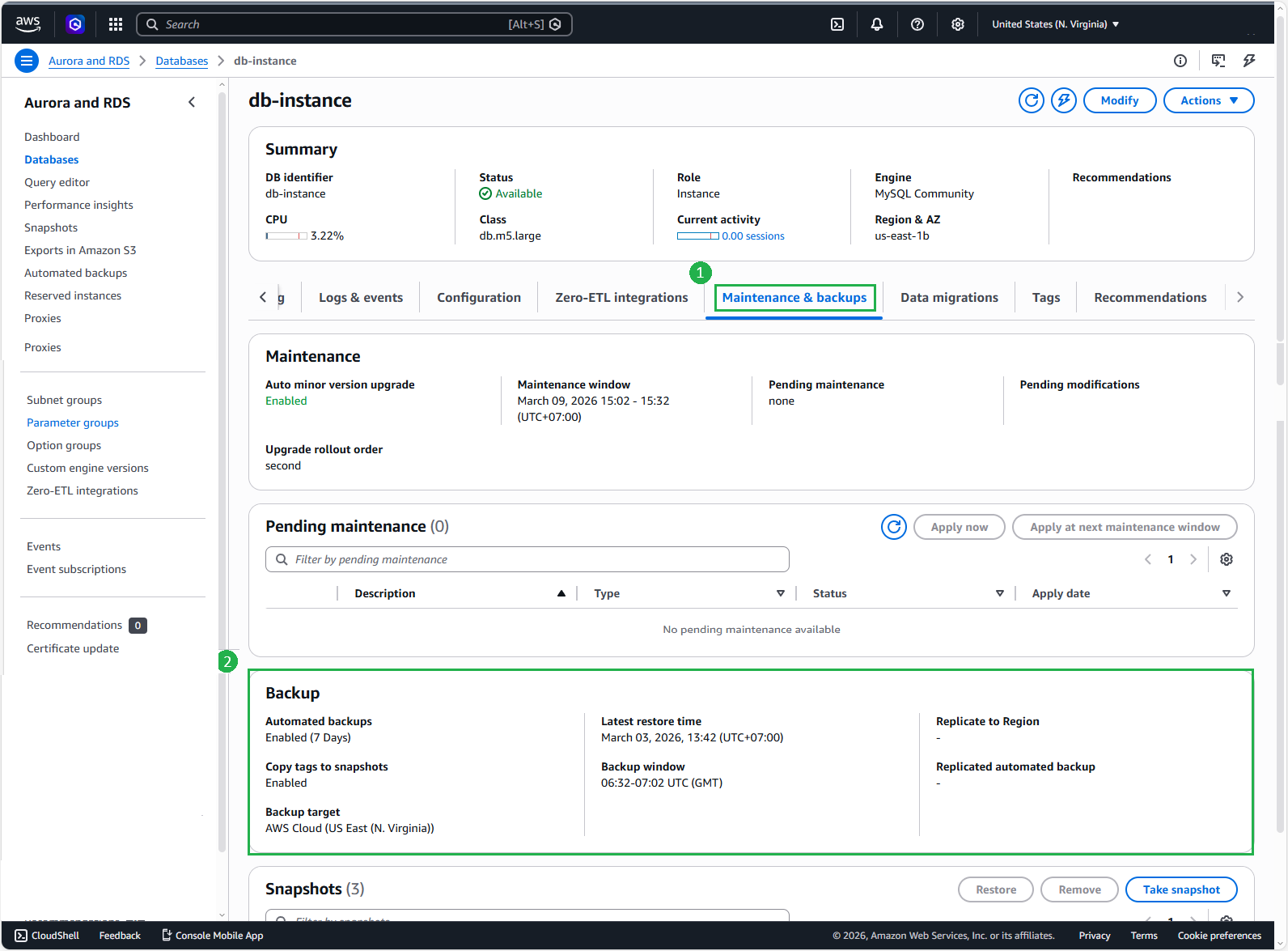
- Navigate to the Maintenance & backups tab.
Managing Database Snapshots
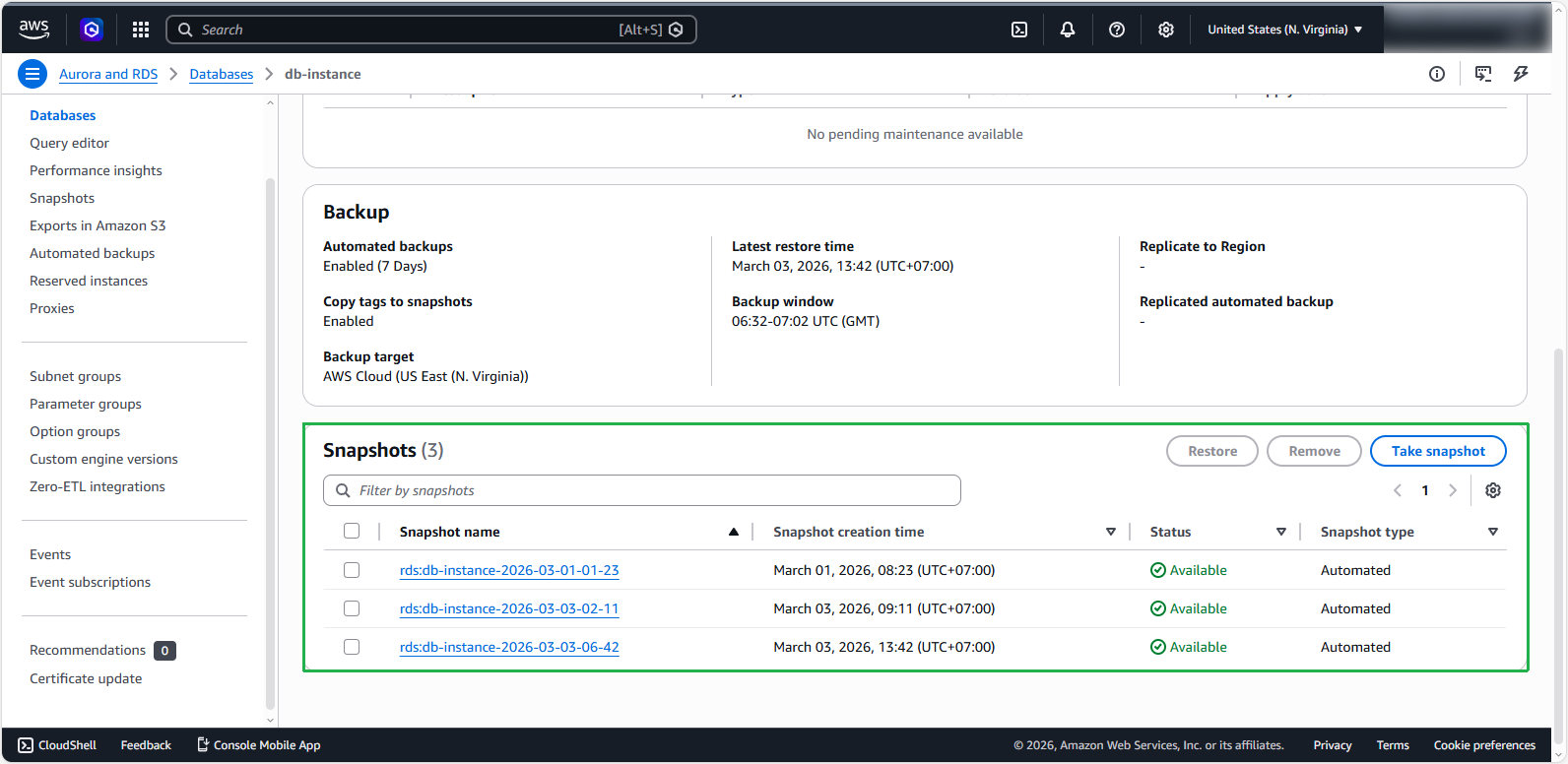
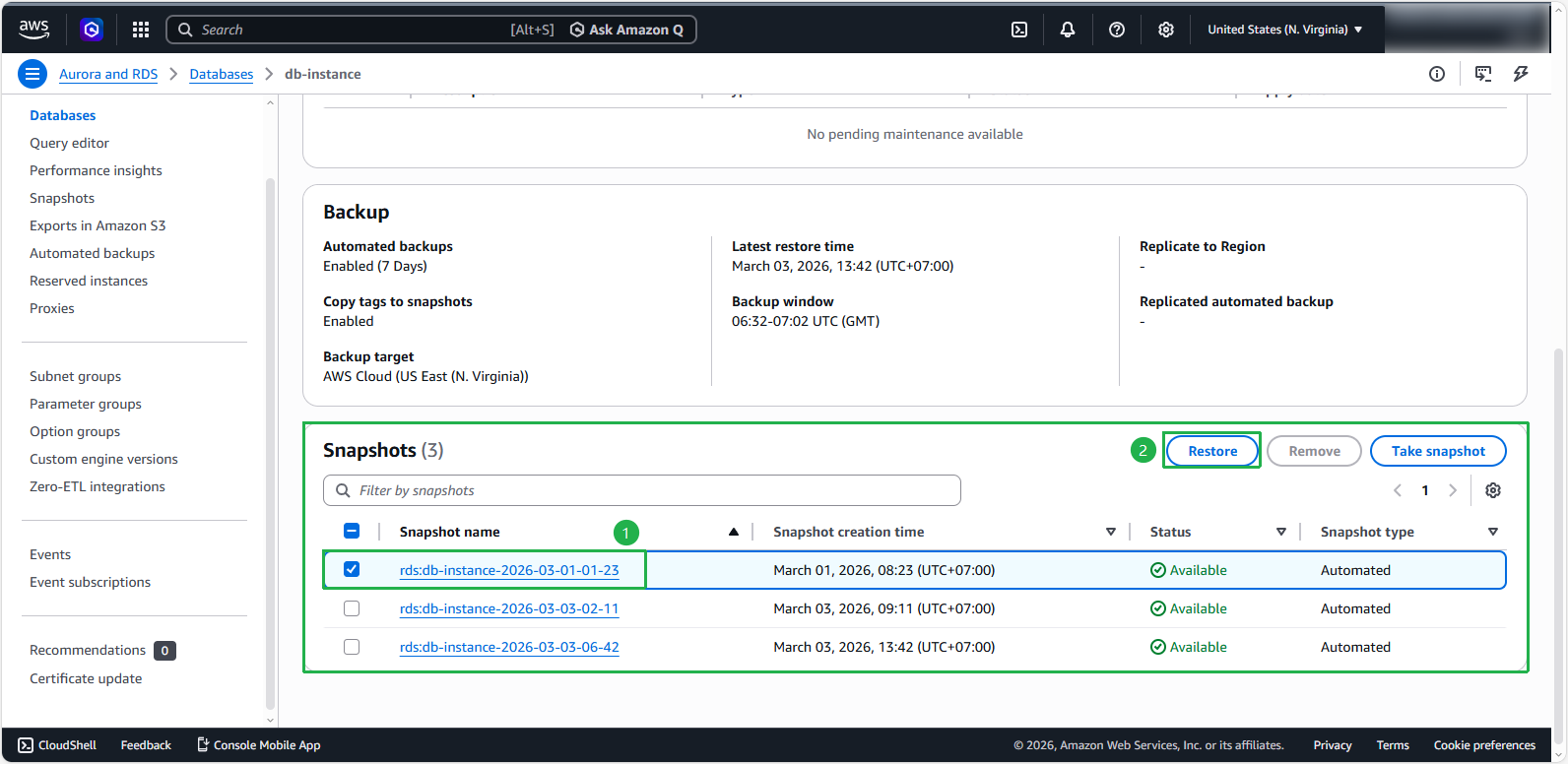
- Scroll down to snapshots section:
Restoring from a DB Snapshot
Select the DB snapshot you want to use as your restore point, choose Restore
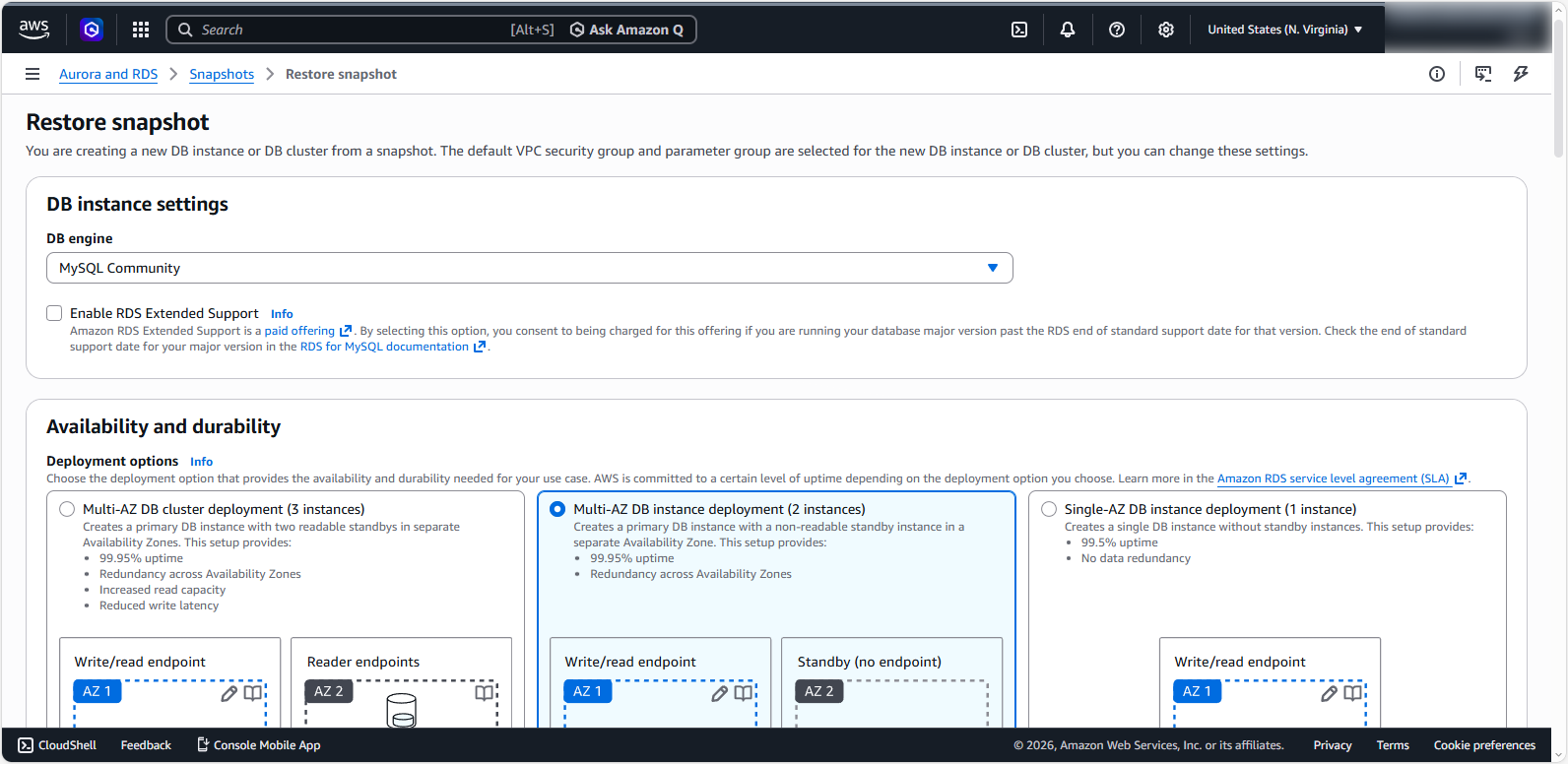
Configure your restored database instance:
- Provide a unique DB instance identifier for the new instance like
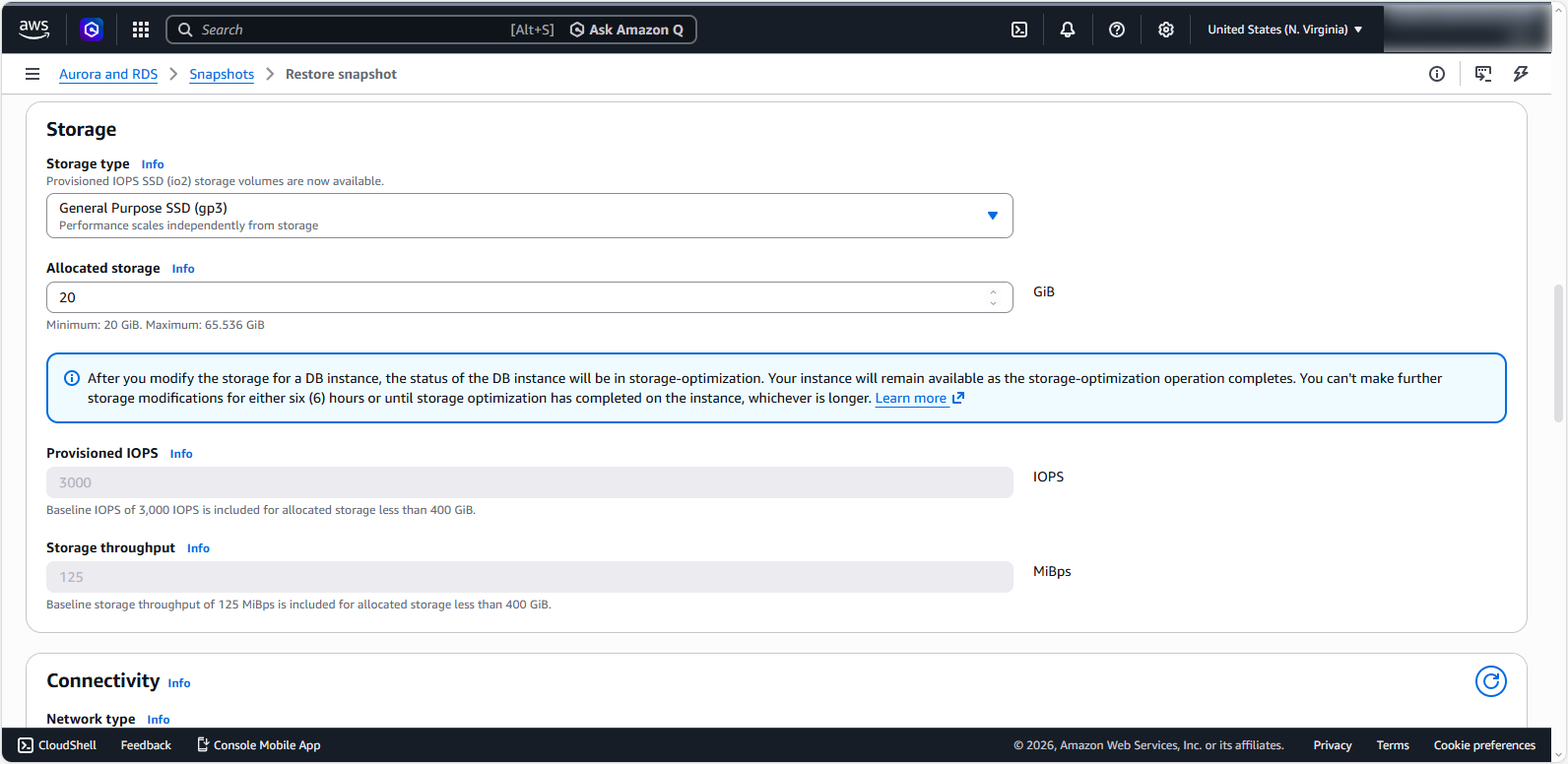
fcaj-2 - Select appropriate instance specifications (compute, storage, etc.)
- Configure network and security settings
ℹ️ Information: In this step, I renamed DB instance identifier to fcaj-2. I kept the remaining configurations unchanged.
💡 Pro Tip: When restoring a production database, consider restoring to a smaller instance class first for testing, then scale up as needed to minimize costs during validation.
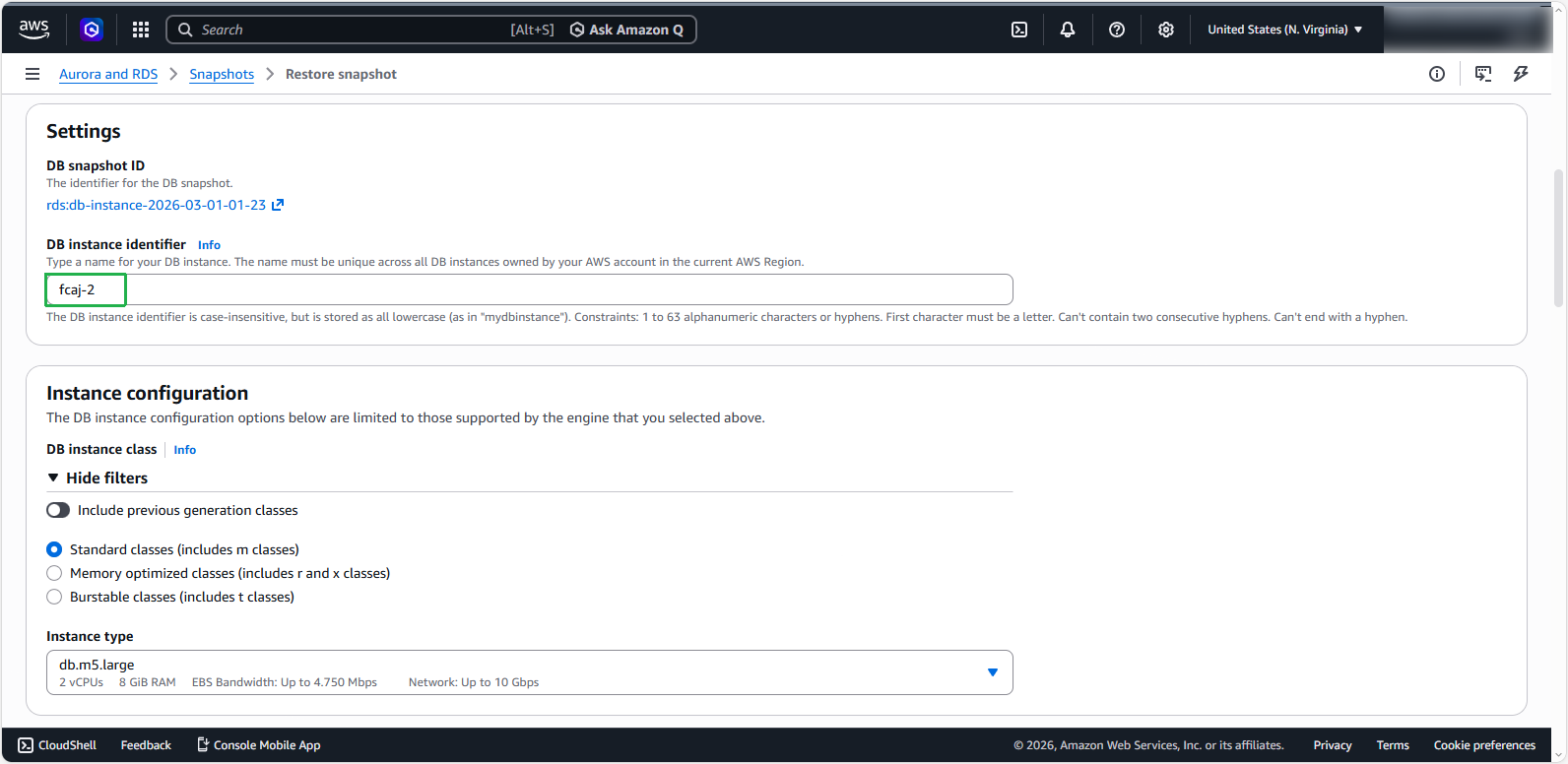
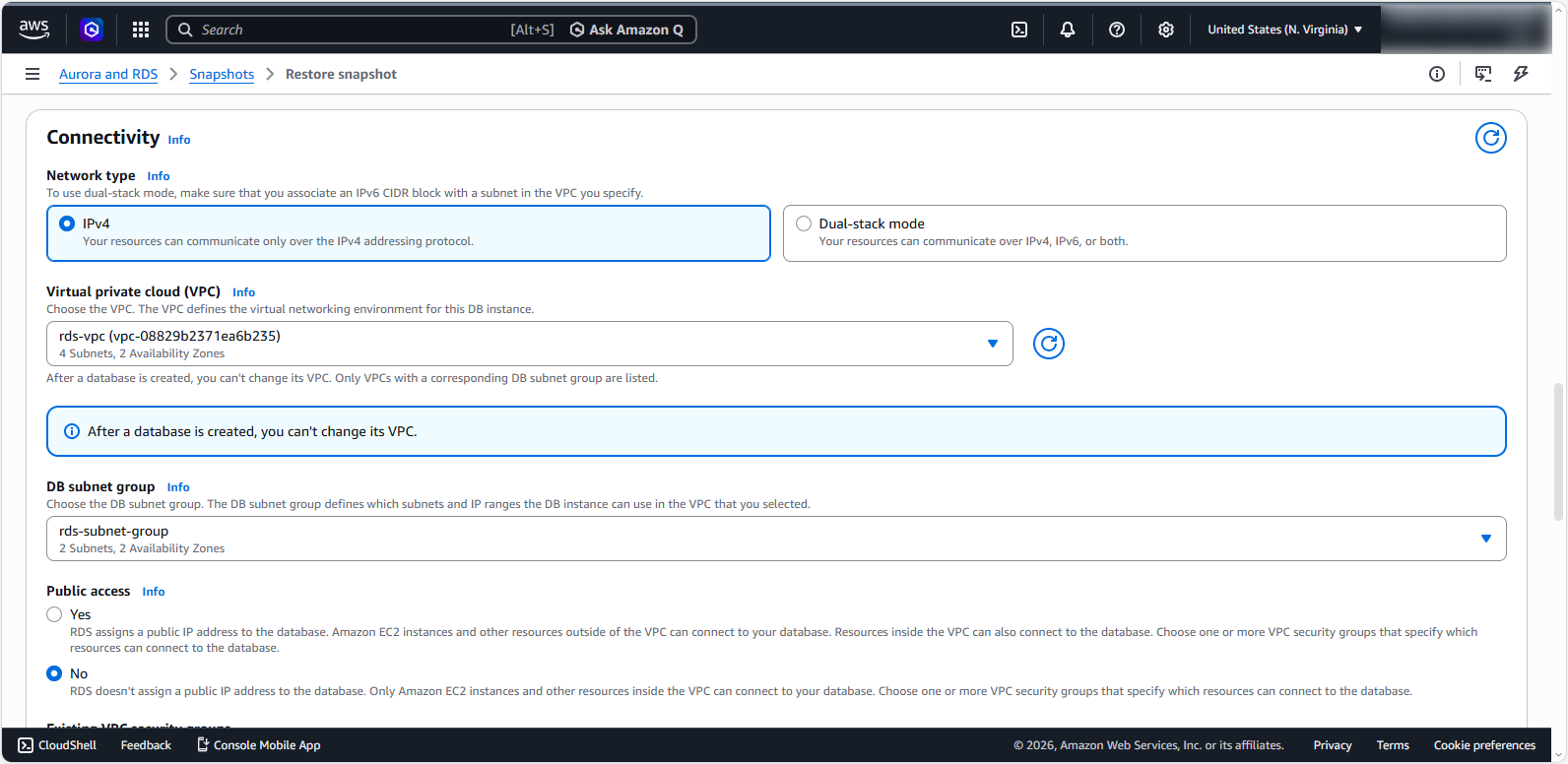
- Provide a unique DB instance identifier for the new instance like
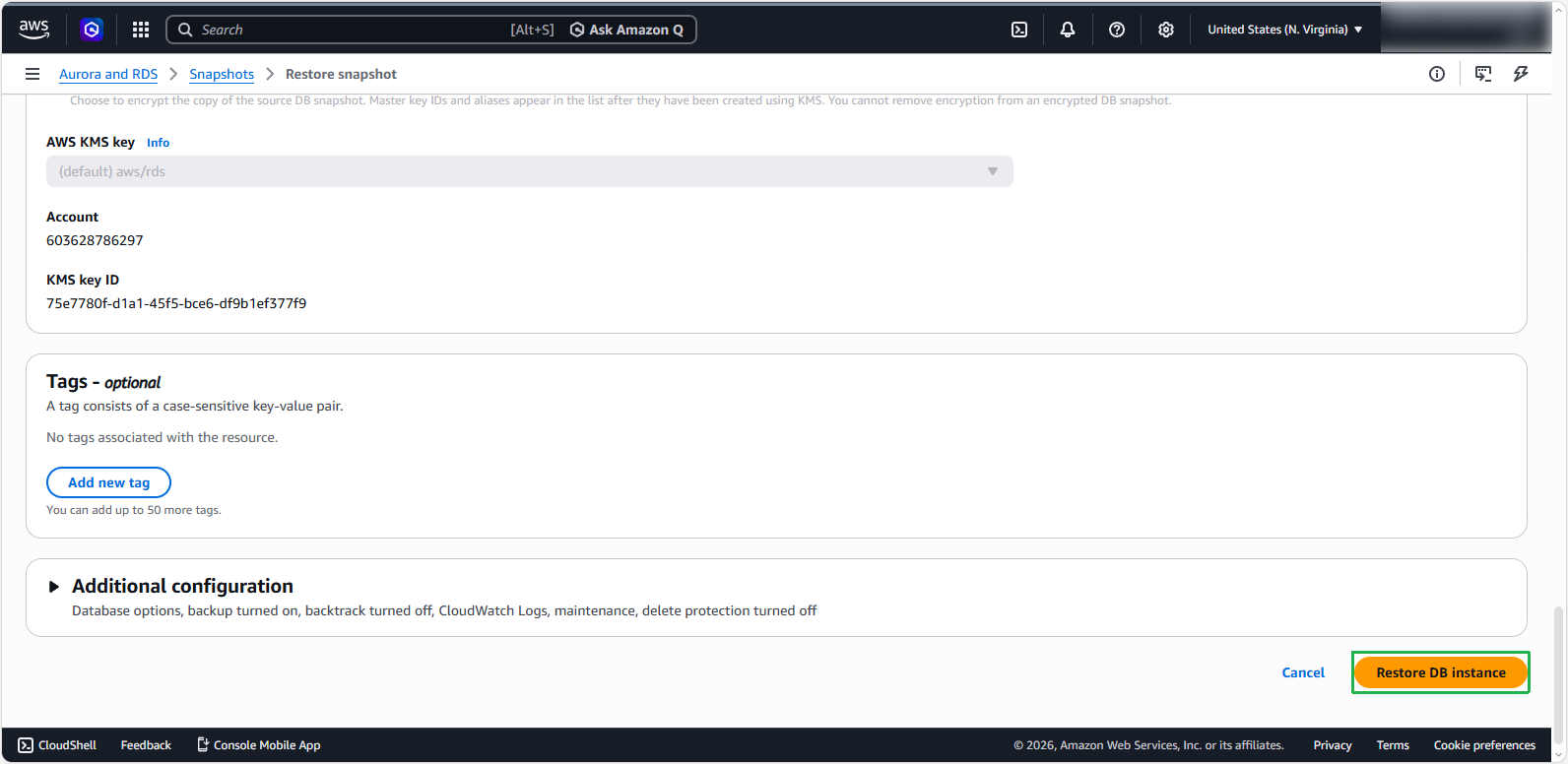
Review your configuration settings. Choose Restore DB instance to begin the process.
⚠️ Warning: The restore process creates a completely new database instance with its own endpoint. You will need to update your application connection strings to point to this new instance if you intend to use it for production.
Verifying the Restored Database
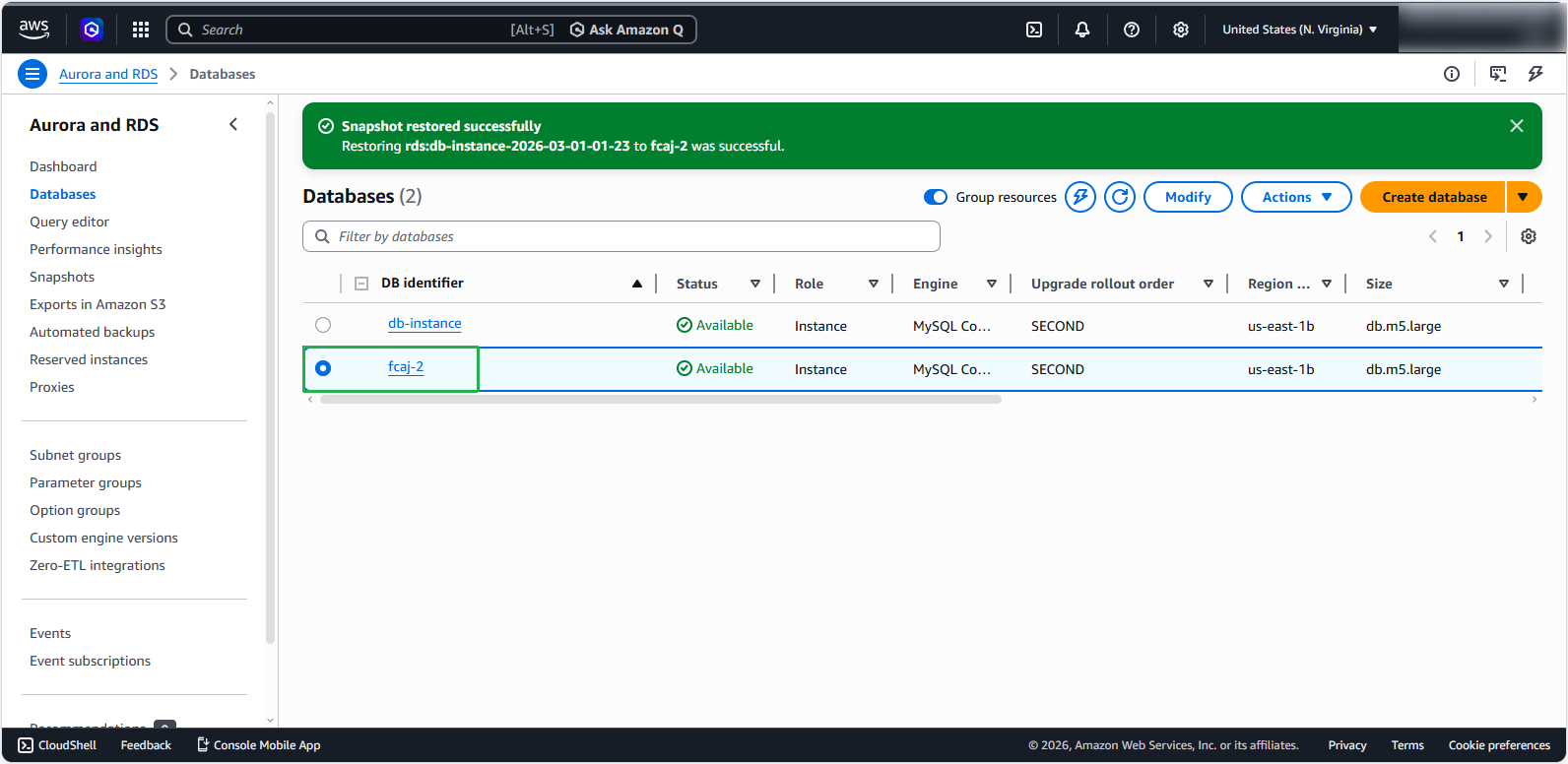
Confirm successful restoration:
- Check that the new DB instance appears in your RDS console
- Test connectivity and data integrity before directing production traffic to the restored instance
🔒 Security Note: Remember to configure the same security groups and parameter groups as your original instance if you want identical access controls and database settings.